
San Tin’s goals and loss: indigenous suffer amid growing government power
A statue of Man Tin-cheung, a general in the Southern Song Dynasty, stands in silence at a park in San Tin, New Territories. It looks north towards the mainland and guards the descendants of the Man clan, who have lived here for hundreds of years.
Man Kim-fung, the 24th generation of Man Tin-cheung, is one of the local indigenous males. After retiring from City University of Hong Kong, he now serves as a consultant to the San Tin Rural Committee.
Last July, Man had to sell all his private farmland inherited by his ancestors to the government, at the price of HK$1,032 per square feet, given the development needs of the Northern Link project.
“Once the government issues the land will be resumed, there is no way we can argue about it,” he said, adding he still didn’t receive his compensation for at least seven months.
“Since my land now belongs to the government, tenants no longer pay me rent. We lose the land and we lose the income, yet we haven’t received any compensation. We are losing everything. We are losing all the time,” he added.
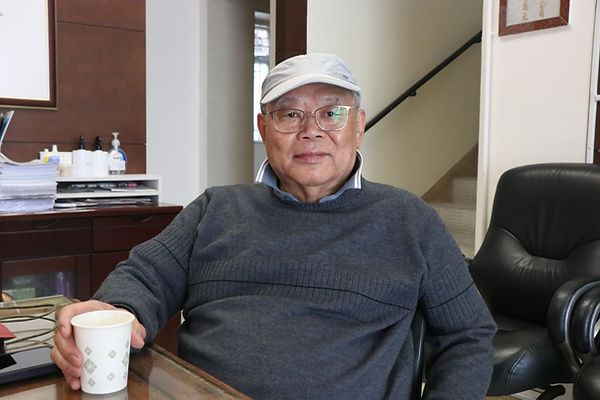
Man Kim-fung doesn’t want to take any legal actions against the government on land compensation.
Like Kwu Tung, San Tin is one of the main areas affected by land resumption for the Northern Link project because of a planned station there. But different from Kwu Tung, where the resumption targets land built with squatters, affected land in San Tin is mainly farmland and brownfield owned by indigenous villagers.
Under the Basic Law, all land in Hong Kong belongs to the State. Nearly all private land was granted before the handover in 1997, in other words, indigenous residents hold land contracts signed by the British Hong Kong government.
On the other hand, the Basic Law ensures existing land contracts and renewal policies will remain in force, and protects the lawful rights and interests of New Territories indigenous residents.
The rationality and legality of the government’s land resumption power have been questioned. In this case, the approach of acquisition focuses too much on speed and fails to put people first.
Subject to the Land Resumption Ordinance, the Chief Executive in Council can resume the land for a public purpose. Once the notice of resumption is gazetted, ownership will revert to the government after one month unless extended, at which point all previous rights to the land will end.
Chan Kim-ching, a researcher who has followed local land development issues for more than ten years, said the ordinance grants the government immense power throughout the land resumption process.
“LRO means that the government terminates others’ rights to use the land, which is called ‘vesting’. As long as the government identifies a ‘public purpose’ for a piece of land, they can resume it,” he said.
According to the LRO, it also protects the rights of land owners to appeal to the Lands Tribunal, if they don’t agree to the amount of compensation.
“Owners can only appeal the compensation amount, but they cannot challenge whether the land truly has a public purpose. This is why, over the years, none of any legal cases has been won against the government,” Chan said.
“We often describe the ordinance as the government’s ‘Imperial Sword’, because once it is used, the government is guaranteed to get the land,” Chan added.
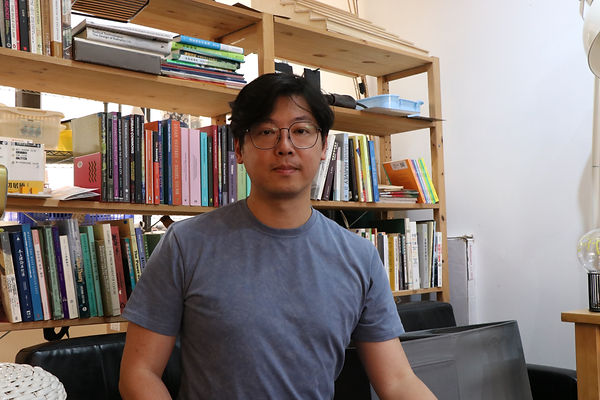
Chan Kim-ching says the government has become more assertive in the way of resuming land.
The compensation of agricultural land raises to HK$1,043 per square feet under the new standard introduced on April 1, higher than the amount when Man’s agricultural land was resumed last July. The adjustment is on a half-year basis considered to fluctuate market value, according to compensation assessment.
“If we really want to disagree, then we have to go through all the legal procedures and sue the government. It will be a losing battle. Even if we are dissatisfied with the compensation, we have no choice but to accept it,” Man said.
In San Tin, indigenous inhabitants share the surname Man, belonging to one of the Five Great Clans in the New Territories. Male descendants are granted “Ding Rights” under the Small House Policy in 1972, allowing them to build one house in their lifetime without paying for the land.
Zhang Xiaoshan, a land law professor at Guangdong University of Foreign Studies, said the government’s power to resume land may not undermine the substantive efficacy of the “Ding rights”.
“The government needs to balance those rights and interests against the broader public interest and secure the cooperation of the indigenous inhabitants. Of course, this is not only a legal question but also a matter of political negotiation,” she said.
“From my observation, since the Choi Yuen Village incident in 2010, the government has shown greater caution in invoking the LRO, with due regard to indigenous inhabitants’ rights and private property,” she added.
In terms of power legitimacy, Zhang said the government has the statutory power to resume land for public purposes.
“This is particularly so in the context of the Northern Link project area and the larger Northern Metropolis development, where the public interest involved may be sufficiently weighty to justify the exercise of that power,” she added.
Zhang Lei, a professor in the field of urban history at the Hong Kong Polytechnic University, said the Northern Link is purely a political project and a national task.
“Historically, Hong Kong was cautious of mainland China and treated the border as a ‘buffer zone’. The government felt there was no need to put important resources near the border. As a result, the Northern New Territories remained rural and undeveloped for a long time,” he said.
“However, the old policy of isolation no longer works. Although the Northern New Territories is at the edge of Hong Kong, it is the geographic centre on the Greater Bay Area map. It is inevitable to develop the area,” he added.
“Even so, I hope the government can do better when carrying out the policy, for example, to compensate affected residents more. Land resumption impacts many people’s lives and livelihoods. The government shouldn’t do whatever it wants just because it has the power,” he said.

Zhang Lei hopes the government can respect lawful rights and interests of residents.
Because the government intentionally avoided formal development, large parts of the Northern New Territories were left without proper oversight, allowing the farmland to deteriorate to brownfield sites.
These brownfield sites refer to original agricultural land but used for industrial activities that are incompatible with the surroundings. A survey by the Planning Department in 2019 identified 1,579 hectares of brownfield sites across the New Territories, including 165 hectares currently idle.
Wong Long-long, who has lived in San Tin since the 1990s, has witnessed the land being illegally used while the government neglected it.
“San Tin has a lot of brownfield sites, such as scrapyards and storage areas seen everywhere. Originally, this land was for agriculture, made up of fish ponds or pools, but dumping and development have gradually turned it into the messy brownfield you see today,” he said.
The urbanisation of San Tin in the past 14 years.
The Planning Department states that activities such as filling ponds or using farm land for storage and parking are unauthorised. The government will enforce stringent laws against these violations and does not permit illegal brownfield sites to remain, according to the Development Bureau.
“These brownfield sites are usually private land and are left idle for long periods. Although the government prohibits illegal land use, it is often unaware when violations occur. Without a complaint, the authorities won’t know and are unlikely to investigate, as it is impossible for them to patrol the area every day,” Wong added.
In the Northern Link project, the government adopts the area-wide model, shifting the responsibility for local infrastructure and facilities to the property developers.
“This model leads to large-scale land hoarding. For residents living in decent conditions who refuse to move, some developers employ coercive tactics, such as intimidation or the deliberate degradation of the local environment,” Chan said.
He added there is a clear difference between those who actually live in rural areas and those who own the land.
“When development begins, those who truly live and work there receive almost no benefits; instead, the vast majority of government compensation goes to the landlords. Some landlords may even evict existing tenants early to secure the payout,” he said.
“Consequently, traditional land resumption methods have failed to address the needs of the actual residents,” Chan added.
Man Luk-sing, the chairman of San Tin Rural Committee, is the bridge between authorities and villagers during negotiations.
“I am only responsible for liaising between government representatives and residents to discuss the compensation. As for other land resumption and development policies, I fully support and cooperate with the government,” he said.
On April 16, two more pieces of land in San Tin, with an area of about 1,726 square metres, were acquired for the Main Line construction of the Northern Link, as noticed by the Land Department.
“The government has already resumed 70 million square feet of land in San Tin, and we have no way to stop it,” Man Kim-fung said.
“Part of the land being taken includes the Man clan’s ancestral graves. They are on the hillside and hold many years of history and emotion. There is nowhere else, and no way to move them. It will be a great loss that the government doesn’t care,” he added.
Photo Gallery of San Tin
click on each photo to view in full


